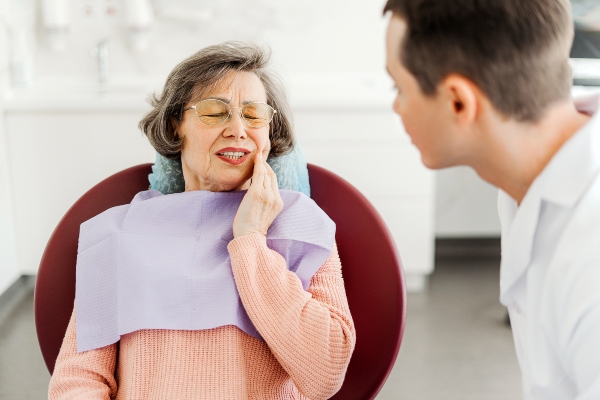
 You may already have temporomandibular joint (TMJ) disorder or TMD and not know it. Those mysterious headaches have a root cause. The general dentist will assess you. The results may indicate your jaw joint as the source of your pain. Understanding why your TMJ issues may be causing your headaches can provide you with the right solution.
Jaw joint problems causing headaches
It can be surprising for some people to learn that TMD is causing headaches. But TMJ headaches are common. Knowing more about them can provide lasting relief. The jaw joint has a vital role in connecting the lower jaw to the skull. It functions as a hinge each time the mouth opens and closes. It needs many bones and muscles to function without issue.
Misalignment, stress, and swelling can interrupt the jaw joint’s smooth functioning. Pain from the jaw joint spreads to different areas, such as the temples. TMJ headaches mask themselves as normal migraines or tension headaches. Pressure builds behind the eyes or in the temples. It worsens when the individual talks or eats.
Sometimes, patients complain about jaw issues while having headaches. The general dentist can pinpoint the root cause of the discomfort. The diagnosis is possible by palpating the jaw and the jaw joint. Ordering dental X-rays and scans can confirm the source of the pain.
Signs and causes
Headaches may indicate TMD. But TMJ headaches do not occur by themselves. Patients may also experience jaw-popping when moving the jaw. There could also be tenderness of the face or neck. Morning jaw stiffness limits one’s ability to open the mouth. Earaches can also occur. Some individuals feel some changes in how the teeth fit together. Here are some causes of TMD headaches:
- Chronic stress can result in frequent jaw clenching and jaw muscle tension.
- Teeth grinding or bruxism can add more pressure to the jaw joints and muscles, resulting in pain and swelling.
- Trauma to the jaw or face can lead to muscle strain or joint misalignment.
- Poor posture can affect jaw alignment and surrounding jaw muscles.
- Degenerative joint diseases and arthritis can affect the TMJ.
Solutions from a general dentist
The general dentist will evaluate the patient’s mouth and medical history during the consultation. This assessment will be a combination of symptom study, physical exams, and diagnostic imaging. After the diagnosis, discussing the treatment options will follow. The general dentist will create a treatment plan based on the patient’s lifestyle, symptoms, and health. Any of the following may be part of the treatment plan.
Muscle relaxant injections can help manage jaw joint pain. Each injection targets specific jaw muscles. The goal is to reduce involuntary jaw clenching and tension in the jaw muscles. These injections relieve jaw pain and headaches caused by TMJ disorders.
A custom-fitted mouthguard or splint can help relieve headaches by reducing pressure on the jaw joint. It prevents the lower and upper dental arches from meeting. This device also protects the teeth from damage due to bruxism while sleeping at night.
Lifestyle changes can help relieve the headaches. Good posture and stress management can improve TMJ pain. Meditation may also relieve anxiety and stress. These practices can prevent or reduce headaches.
Jaw joint issues are to blame for your TMJ headaches
Headaches can be debilitating. But knowing the root cause can help stop it right away. A full assessment can determine if the headache is due to a TMJ disorder. Working with your general dentist can help you regain a good quality of life.
Request an appointment or call Elliott Ostro, DMD at 212-847-3833 for an appointment in our New York office.
Related Posts
Temporomandibular joint (TMJ) disorders can be the result of stress, as it can trigger muscle tension that can lead to bruxism, commonly called teeth grinding. Grinding teeth puts additional strain on your TMJ, leading to symptoms like an aching jaw, a clicking jaw, or difficulty closing or opening the mouth. TMJ disorders can also be…
Research reveals that your TMJ attaches the lower jaw to the skull. There is so much relying on the health of this joint. Even so, many factors lead to ailments affecting it. Understanding jaw joint disorders can help you maintain a healthy TMJ.TMJ dysfunction or TMD is a condition that causes pain in the jaw…
Temporomandibular joint (TMJ) disorders can interrupt your daily activities. This condition can prevent you from performing oral functions with ease. You can call your dentist about your symptoms. Knowing how your general dentist can help you with your TMJ disorder symptoms can motivate you to schedule a visit soon.Diagnosing and treating TMJ disorders is part…

